EXTRA: The 2009 film The Young Victoria includes an episode in which Prince Albert is told that I puritani is the favorite opera of Queen Victoria (which indeed it was), who recently came to the British throne, and, in courting her, he claims that it is his favorite too. Victoria, however, sees through his gambit – but in the end agrees to marry him anyway --- [She found him 'beautiful, and so excessively handsome, and had him fathered 9 children.]
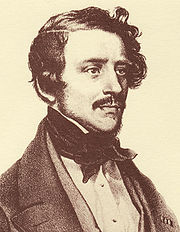
Gaetano Donizetti wrote 65 operas, a dozen of which are still an important part of the operatic repository.
Along with Bellini and Rossini, he was a leading composer of bel canto operas, that celebrated the beauty of the human voice in long, expressive melodies and vivid, elaborate coloratura (花腔) ornamentation.
His best-known operas are:
* L'elisir d'amore, Lucia di Lammermoor, and Don Pasquale - in Italian
* La favorite and La fille du régiment - in French
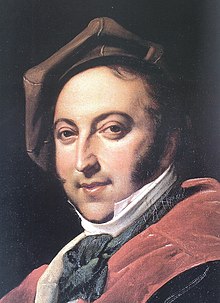
[dʒoaˈkiːno anˈtɔːnjo rosˈsiːni] (1792 – 1868) - nicknamed "The Italian Mozart"
- the greatest opera composer of the 1810s through to the 1830s
He was an Italian composer who wrote 39 operas as well as sacred music, chamber music, songs, and some instrumental and piano pieces. Until his retirement in 1829 (at an early age of 37), Rossini had been the most popular opera composer in history. His comic operas bubble with invention and fun.
His serious operas have great melodic beauty and superb writing for both voice and orchestra.
His innovations included: - the revitalization of opera buffa - the replacement of keyboard-accompanied recitative by orchestral accompaniment, creating an uninterrupted flow of music - the expansion of the chorus and its dramatic integration - the development of the coloratura aria
Figaro, the barber, approaches singing. Since Figaro used to be a servant of the Count, the Count asks him for assistance in helping him meet Rosina, offering him money should he be successful in arranging this.
Key features of Romantic music:-
* strong association with poetry and drama of the great literary figures of the time, expressing ordinary human emotions - love, happiness, sorrow; e.g. Goethe's Sorrows of Young Werther.
* a response to nature, especially in its wilder aspects.
* its emphasis on the individual - either the composer or the performer.
Italian opera in the early 19th century was dominated by 3 composers: Rossini, Donizetti, and Bellini.
* These three laid the foundations for the work of Verdi.
* These three were great bel canto composers; bel canto, meaning "beautiful singing", was the great vocal tradition of 19th-century Italian opera
Syphilis, together with tuberculosis, put a premature end to many a flourishing Romantic talent.
Source: The Great Composers
“The Romantic era was one of extremes,
with composers not only looking back to the past
but also abandoning classical conventions and
experimenting with new and daring harmonic language and form.”
“Most Romantic composers composed not only concert music
but also music for amateur use.”
“Far more homes now owned a piano.
There was a consequent demand for music
that could be played in the home,
and many orchestral and operatic works were arranged for the piano.
The piano is one instrument that symbolizes the Romantic period.”
Gluck playing his clavichord - Joseph Duplessis (1725–1802, French) - oil on canvas (100 x 80.5 cm) 1775 - Kunsthistorisches Museum (Vienna)
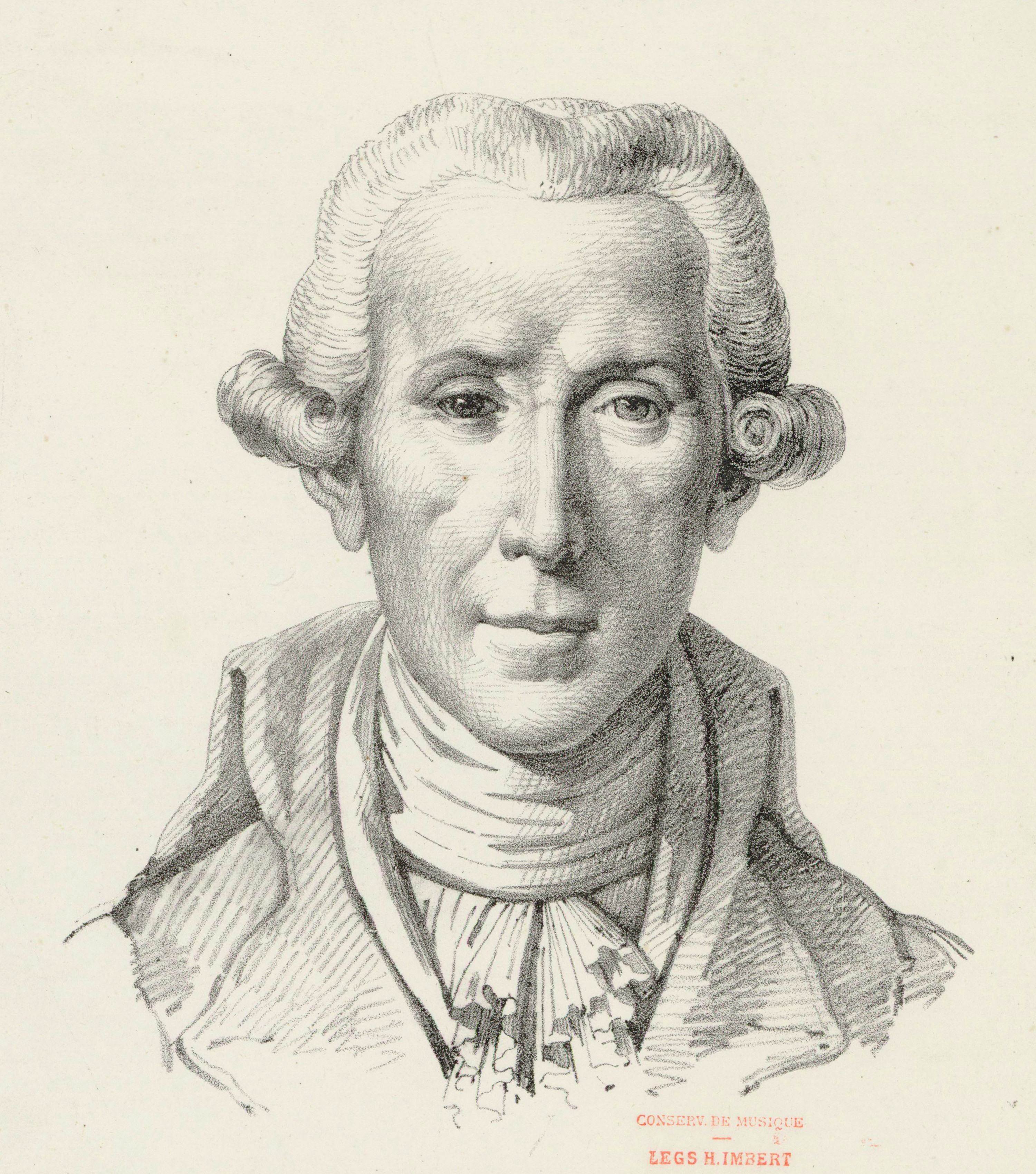
Gluck brought reforms to opera. Expousing a more continuous texture in which music served the poetry and drama of the libretto, he employed vivid characterization, simple plots, and large-scale planning of music to bring universal human themes and emotions to life.
With a series of radical new works in the 1760s, among them Orfeo ed Euridice and Alceste, he broke the stranglehold that Metastasian opera seria (serious opera, contrast to opera buffa / comic opera) had enjoyed for much of the century.
In new Classical style, with its light homophonic (rather than polyphonic) effects.
When Carl Czerny
went to study with Beethoven, he was required to purchase C.P.E. Bach's True Art of Keyboard Playing, which is now perhaps better known than any of his music.
Background of 'Ave Maria': In 1810, Sir Walter Scott published The Lady of the Lake, an epic poem of 6 cantos, concerning the actions in 6 days, during a war between the lowland Scots and the highland clans. 'The Lady' was Ellen Douglas, and 'the Lake' was Loch Katrine in the Scottish Highlands.
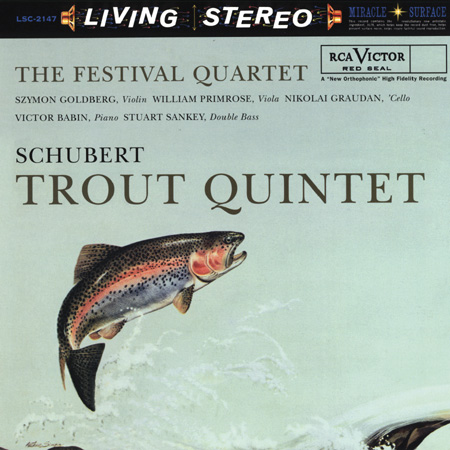
In Canto Three, Ellen was praying to the Virgin, singing 'Ave Maria'. This poem was then loosely translated to German, based on which Schubert composed 7 songs. The 6th song is the 'Ellen’s third song' or 'Hymn to the Virgin'. It was later adapted to use the full lyrics of the Latin Ave Maria. It has then become one of Schubert’s most popular works under the title Ave Maria, in arrangements with various lyrics.
In Canto Two, they sing the boat song “Hail to the Chief”. Based on that, London songwriter James Sanderson, in 1812 wrote a song (from an original Scottish Gaelic melody), which was soon adapted as an anthem or fanfare for the POTUS (after rounds of ruffles and flourishes).
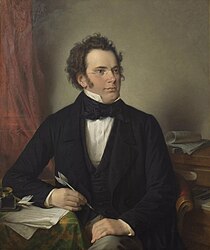
An Austrian composer, Schubert represented a turning point in musical history. While his own musical style was essentially Classical, his inspiration looked forward to the age of Romanticism.
Only the first two movements are completed; the third movement was sketched, and the fourth probably never written.
In 1928, 100 years after his death, a special commitment was established in Vienna, attempting to complete the last two movements. Soon they declared the "unfinished symphony" complete and perfect.
This is the most famous of his 10 symphonies, and is comparable to Beethoven's.
- aka the "Great" Mvt.1 Andante - Allegro ma non troppo - Piu Moto
Mvt.2 Andante con moto in A minor
Mvt.3 Scherzo. Allegro vivace Trio in C major/A major
Nvt.4 Allegro vivace
* by Wiener Philharmoniker
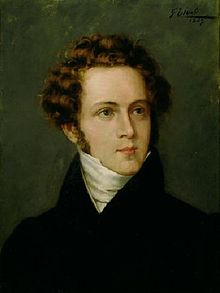 Known for his long-flowing melodic lines, for which he was named "the Swan of Catania", Bellini was the quintessential composer of bel canto opera.