Thursday, July 4, 2013

Music #417 - Holst

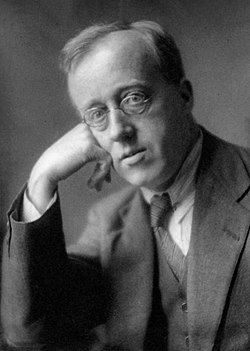
Gustav Holst  
(1874 - 1934)

An English composer, Holst is most famous for his orchestral suite The Planets.
 
The suite has 7 movements, each of which is named after a planet (other than Earth) of the Solar System and its corresponding astrological character as defined by Holst.   

Source: Wikipedia

Digital, or Prom 90
Mars, the Bringer of War
* Venus, the Bringer of Peace
* Mercury, the Winged Messenger
* Jupiter, the Bringer of Jollity
* Saturn, the Bringer of Old Age
* Uranus, the Magician
* Neptune, the Mystic


Music #416 - Williams

Ralph Vaughan Williams  - top tracks
/ˌreɪf ˌvɔːn ˈwɪliəmz/  (1872 – 1958)


My Lady Greensleeves
An English composer and a collector of English folk music and song, Williams composed an orchestral piece in 1934 entitled 
Fantasia on Greensleeves 
In it, the tune of Greensleeves alternates with that of Lovely Joan. 

Both are traditional English folk songs and tunes.
Greensleeves with lyrics 
Lovely Joan - lyrics


Anne Boleyn & Henry VIII
There is a persistent belief that Greensleeves was composed by Henry VIII for his lover and future queen consort Anne Boleyn. 

Boleyn allegedly rejected King Henry's attempts to seduce her and this rejection may be referred to in the song when the writer's love "cast me off discourteously". 


Yet, Henry did not compose "Greensleeves",which is probably Elizabethan in origin and is based on an Italian style of composition that did not reach England until after his death.
Source: Wikipedia


= = = = =
Partsongs  

* Three Shakespeare Songs - music by Williams, words by Shakespeare:  
   1. Full Fathom Five - The Tempest (Act 1 scene 2)
   2. The Cloud-Capp'd Towers - The Tempest (Act IV scene 1)
   3. Over Hill, Over Dale - A Midsummer Night's Dream (Act II scene 1)


A Midsummer Night's Dream


Loch Lomond / The Bonnie Banks o' Lake Lomond   
   - traditional Scottish, arranged by Williams


Music #414 - Scriabin

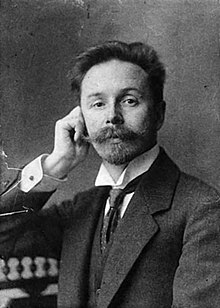
Alexander Scriabin  - top tracks
/skriˈæbɪn/ Алекса́ндр Никола́евич Скря́бин
(1872 – 1915)

* His early work is characterised by a lyrical and idiosyncratic tonal language influenced by Frédéric Chopin.

* Later in his career, Scriabin developed a substantially atonal and much more dissonant musical system.

* Scriabin was influenced by synesthesia, and associated colors with the various harmonic tones of his atonal scale.

A Russian composer and pianist, he is considered by some to be the main Russian Symbolist composer.
Source: Wikipedia

Mysterium 

Selections for Solo Piano

Prometheus / Poem of Fire

Le poème de l'extase / The Poem of Ecstasy

Monday, July 1, 2013

Music #413 - Satie

[eʁik sati] (1866 – 1925)

Eric Satie, a French composer and pianist, was a colorful figure in the early 20th century Parisian avant-garde. 
     An eccentric, Satie was introduced as a "gymnopedist", shortly before writing his most famous compositions, the Gymnopédies. 
     Later, he also referred to himself as a "phonometrician" (meaning "someone who measures sounds"), preferring this designation to that of a "musician".

The Gymnopédies 

- 3 short piano compositions, sharing a common theme and structure. 
     Collectively, the Gymnopédies [dances of nude men, in ancient Greek religious ceremony] are regarded as an important precursor to modern ambient music — gentle yet somewhat defying the classical tradition. 

Source: Wikipedia

Trois Gnossiennes

- for your further relaxation


Alice Sara Ott plays
Gnossienne No. 1,
Gymnopédie No. 1,
& Gnossienne No. 3


Music #412 - Ravel

Maurice Ravel

(1875 – 1937)

A French composer known especially for his melodies, orchestral and instrumental textures and effects. 

Along with Claude Debussy, he was one of the most prominent figures associated with Impressionist music

Ravel's piano compositions demand considerable virtuosity from the performer, such as 
Jeux d'eau
Miroirs
Le tombeau de Couperin and 
Gaspard de la nuit

His orchestral music, including Daphnis et Chloé and his arrangement of Modest Mussorgsky's Pictures at an Exhibition, use a variety of sound and instrumentation. 


Ravel is perhaps known best for his orchestral work Bolérowhich he considered trivial and once described as ... 


was completed for an Austrian pianist who had lost his right arm during WWI.
* abridged version
* full version

Source: Wikipedia


Music #411 - Debussy

["de-bu-SEE"]  [klod dəbysi]
(1862 – 1918, French)

A French composer, he, along with Ravel, was one of the most prominent figures associated with Impressionist music.


《牧神的午後前奏曲》(commonly known by its French title Prélude à l'après-midi d'un faune [pʁelyd a lapʁɛmidi dœ̃ fon])
     A faun (top-half man, bottom-half goat) goes for an adventure in the afternoon: a fantasy.
    The work is called a prelude because Debussy intended to write a suite of three movements – Prelude, Interlude, and Final Paraphrase – but the latter two were never composed.


La mer / The Sea  

a 27-minute version


Trois Nocturnes

№1  Nuages / Clouds
№2  Fêtes / Festivals
№3  Sirènes / Sirens
[bɛʁɡamask]
Debussy was travelling in northern Italy, whose outstanding scenery inspired his composition of Suite Bergamasque, which consists of 4 movements
    The 3rd movement, “Moonlight” or "Clair de lune" in French, is the most well-known and well-received:
piano
violin & piano


The Two Arabesques (Deux Arabesques) 

- for piano
Arabesque № 1 - Andantino con moto (- Leezy on piano)
Arabesque № 2 - Allegretto scherzando


Source: Wikipedia


Music #410 - THE EARLY 20th CENTURY

A great book on ...
THE GREAT COMPOSERS
written by Wendy Thompson
published by Hermes House

The Early 20th Century

Music Sets #411 - 439


Music in a New Framework:-

* Impressionism in music
          Composers realized that they need no longer be subject to the tyranny of traditional tonality
           - a system that had lasted for 400 years. One pioneer was Debussy.

* Atonality
          The "12-note system" of the chromatic scale used in various ingenious ways

* Nationalism
          Musical nationalism continued to flourish.

* Music and politics
          The two world wars
          The economic depression  (giving rise to small chamber ensembles)
          Exporting Jazz from the USA to Europe
          The rise of Nazi Germany (central Europe was emptied of Jewish composers and performers)

Source: The Great Composers