Monday, August 19, 2013

Music - Orchestra Conducting

CONDUCTING 


The role of the conductor  中文

(L) a conducting lesson
 
(R) Lead like the great conductors

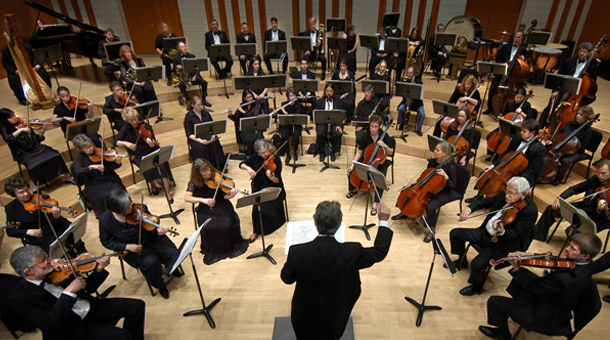
What an orchestra may see of a conductor - conducting Verdi's Triumphant March in Aida opera

An orchestra may see a dancing conductor - conducting Bernstein's Candide opera


Previously, conductors might beat time by banging a staff against the floor.
Jean-Baptiste Lully served Louis XIV, 
the French king who loved to dance/ballet.
Then, Lully struck his toe with the conducting staff, creating an abscess. The wound turned gangrenous, but Lully (intending to ballet again) refused to have his toe amputated; the gangrene spread, resulting in death.


Other conductors (usually the composers) would use bare hands.
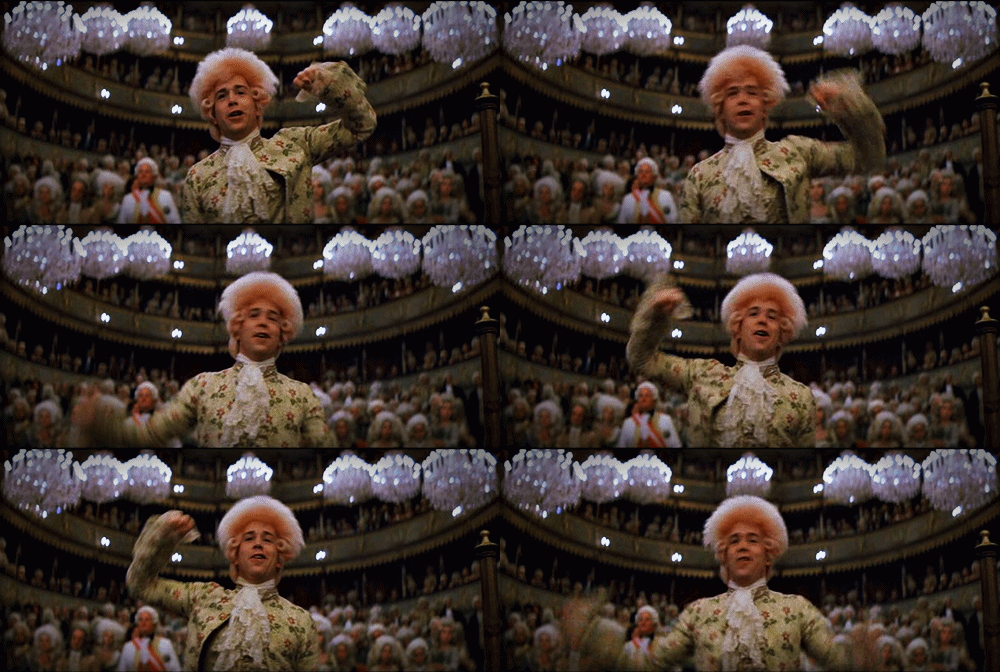
 Mozart conducting his own
 
Abduction from Seraglio opera


Starting with Mendelssohn, conductors would use a baton.
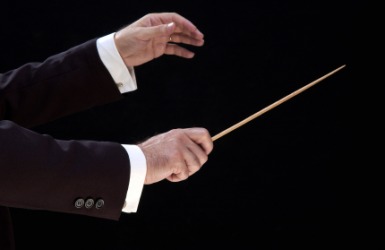
Bernstein conducting Confutatis in Mozart's Requiem
A 7-year-old conductor


Play-conductinga pianist could also be a part-time conductor in a piano concerto ... conducting when not playing on the piano.


Beethoven  - Symphony no. 9 (aka "Choral") - “Ode to Joy”  
 - excerpts from Copying Beethoven (2006 movie) 
Totally deaf then, he conducts as his pretty student signals underground/understage.


Bernstein conducting Haydn Symphony No.88 with his face.


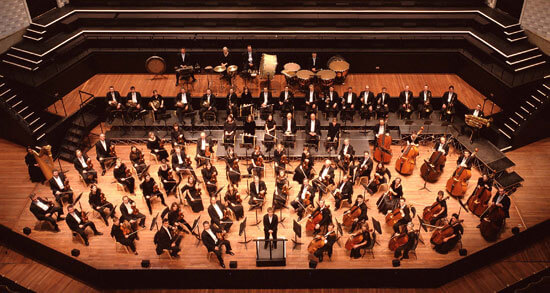
Music - Orchestra Plan Layout - Percussion Section

ORCHESTRA 


Percussion Section 

(back row in the above layout):- a 2-hour overview
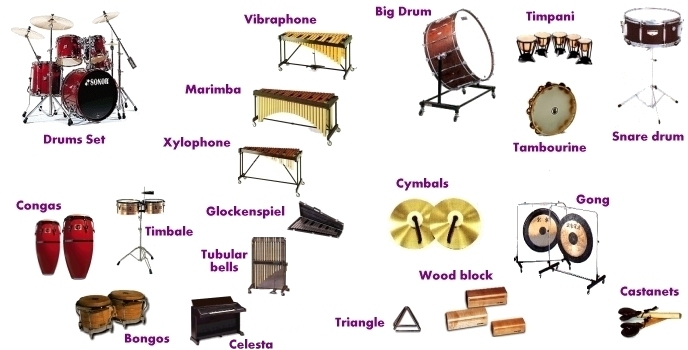
(1) tuned percussion:
        * vibraphone, marimbaxylophone, glockenspiel, tubular bells  
        * handbells, tuned cowbells .....
(2) auxiliary percussion:
        * big drum, snare drum
        * cymbals, triangle, woodblock, tambourine, gong, castanets ..... 
(3) timpani 
The timpanist is traditionally regarded as the principal of the percussion section.


Keyboard Section:  

* Piano
* Pipe organ  - demo
* Celesta  - demo


Music - Orchestra Plan Layout - Wind Section

ORCHESTRA   


Woodwind Instruments  

(to the right of the piano and the harp in the above layout) 

2–4 Flutes - demo (one doubling Piccolo)
2–4 Oboes - demo (one doubling cor anglais or English horn)
2–4 Clarinets - demo (one doubling Bass Clarinet)
2–4 Bassoons - demo (one doubling Contrabassoon)
The size of the woodwinds section can be expressed as 1-1-1-1 (chamber), 2-2-2-2 (Brahms), 3-3-3-3 and 4-4-4-4 (with doubling). 
(beyond the woodwinds in the above layout)  

48 French horns - demo
2–6 Trumpets - demo
2–6 Trombones - demo (one or two doubling Bass Trombones)
1 Tuba - demo    

Source: Wikipedia

Music - Orchestra Plan Layout - String Section

ORCHESTRA   


The string section is the largest group in the orchestra and forms its core.

String Section  

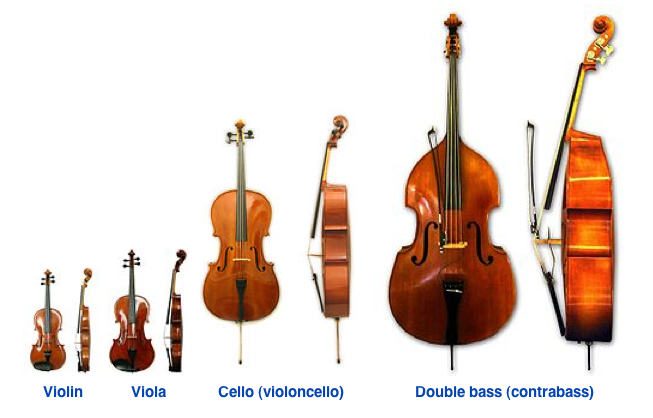
The leading voice among the strings is the violin.
Violins, with 4 strings tuned in fifths,
 can play 2 or 3 notes simultaneously.

Orchestral violins are divided into 2 sections: “firsts” and “seconds”.
** First violins  (melody)  - demo
** Second violins  (harmony) 

** Violas  (the alto of the family, tuned a fifth below the violin) -  demo
** Cellos  (the tenor and bass of the family, tuned an octave below the viola) - demo  
** Double basses  (French or German bows) - demo

The size of the strings section can be expressed as, 
for example, 16-14-12-10-8.

They are primarily played with a bow. 
Some special bowing techniques:
pizzicato (pluck) left-hand pizzicato
tremolo
harmonics
col legno (with the wood)
con sordino (mute)
But, like the harp, they can also by plucked.

** Harp  (47 strings and 7 pedals) - demo
Some other techniques to create special effects: 

Friday, August 16, 2013

Music - Chamber Music

Chamber Music

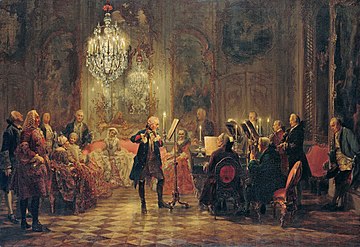
... composed for a small group of instruments (more than 1) ... that could fit in a palace chamber. 
For more than 200 years, chamber music was played primarily by amateur musicians in their homes. Today, many amateur and professional musicians still play it for their own pleasure. 
Source: Wikipedia


Duo
* Violin & Cello Duo
        e.g. Beethoven's Duet for Violin & Cello


Trio
* Piano Trio (piano, violin, cello);
        e.g. Tchaikovsky's: In Memory of a Great Artist


Quartet
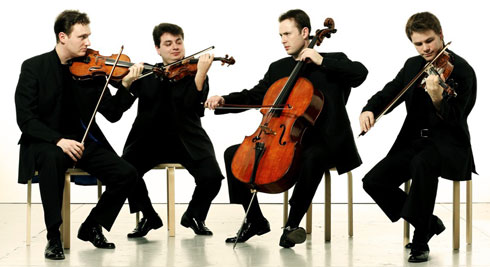
* String Quartet (2 violins, viola, cello);
        e.g. Pachelbel's Canon in D

* Piano Quartet (piano, violin, viola, cello);
        e.g. Mozart's Piano Quartet K.493

* Flute Quartet (flute, violin, viola, cello);
        e.g. Mozart's Flute Quartet in D


Quintet
* Piano Quintet (piano plus string quartet);
        e.g. Schubert's Trout Quintet
* Clarinet Quintet (clarinet plus string quartet);
        e.g. Mozart's Clarinet Quintet
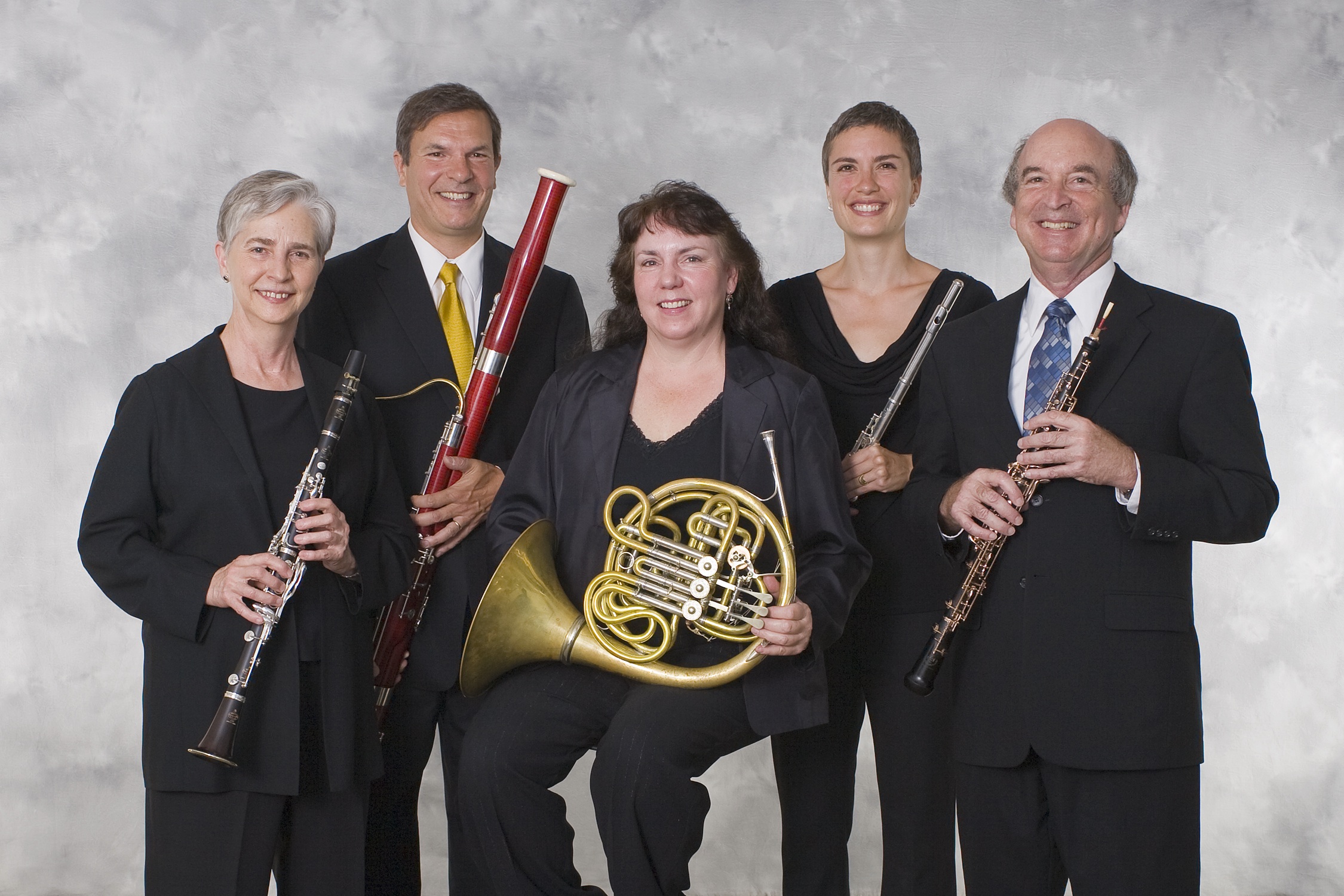
* Wind Quintet (flute, oboe, clarinet, French horn, bassoon);
        e.g. Beethoven's Wind Quintet Op.71


Sextet
* String Sextet (2 violins, 2 violas, 2 cellos);
        e.g. Tchaikovsky's Souvenir de Florence


Septet
        e.g. Beethoven's Septet, Op.20


Octet
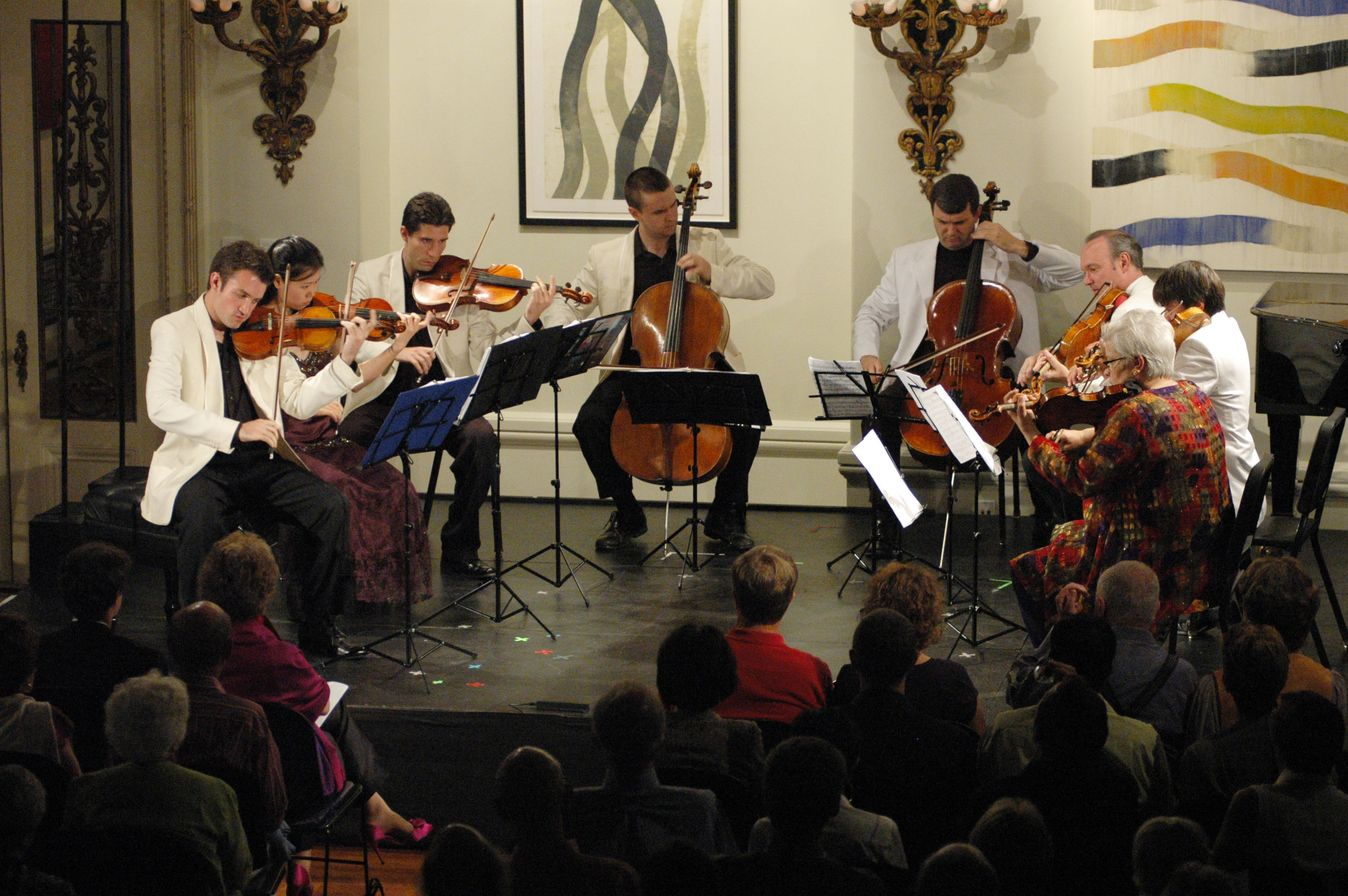
* String Octet (two string quartets)
        e.g.  Mendelssohn's String Octet Op.20


Nonet


Decet


Music - Genres of Art Music

Genres of Western Classical Music 


Solo Recital 

A musical performance highlighting: 
* a single performer 
        (e.g. piano recital - Ständchen (Schubert/Liszt))
* a performer accompanied by a pianist 
        (e.g. violin recital - Ave Maria (Bach/Gounod))
        (e.g. aria - Komm, lieber Mai (Mozart))
* a performance of the works of a single composer 
        (e.g. Chopin on his 200th birthday)


Duet or duo recital

A duet has 2 performers, most often 2 singers or pianists:
* "piano duet" or "piano four hands": 2 pianists on 1 piano 
        (e.g. Schubert's Marches Militaires)
* "piano duo": 2 pianists on separate pianos
        (e.g. Mozart's Sonata K.448)
* others: 
        (e.g. Fauré's Fantaisie flute-harp duo)

In Renaissance music, a duet specifically intended as a teaching tool, to be performed by teacher and student, was called a bicinium.


Concerto 

* usually one solo instrument accompanied by an orchestra
        (e.g. Mozart's Piano Concerto No.21)
* usually has 3 movements (fast, slow, fast)


A sonata also has 3 movements (fast, slow, fast).


Symphony   

* an extended musical composition generally scored for orchestra
* many symphonies have 4 movements (fast, slow, a minuet/scherzo, fast), usually at least 1
        (e.g. Beethoven's Symphony No.2)


Symphonic poem   

- aka tone poem
* usually 1 movement in which the content of a poem, short story, novel, painting ... is illustrated
        (e.g. Sibelius's Finlandia)
* first applied by Liszt to his 13 works in this vein


Overture


* originally applied to the instrumental introduction to an opera
        (e.g. Prelude to Bizet's Carmen)
* Beethoven and Mendelssohn began to use the term to refer to independent instrumental works
        (e.g. Tchaikovsky's 1812 Overture)


Suite

* an ordered set of instrumental/concert band pieces
* they may be extracts from a ballet (Nutcracker Suite) incidental music to a play (L'Arlésienne Suitesopera film (Lieutenant Kije Suiteentirely original movements (Holberg Suite, The Planets).

* In the Baroque era the suite was more precisely defined, with the pieces unified by key, and consisting of dances usually preceded by a prelude or overture. The suite was also known as Suite de danses, Ordre (the term favored by François Couperin) or Partita
* In the 18th century, the term may refer to the entire suite (J.S. Bach's orchestral suites)


Missa   

A form of sacred musical composition, it is a choral composition that sets the invariable portions of the Eucharistic liturgy to music
* mostly in Latin for the Catholics
* also written in the languages of non-Catholic countries 
        (e.g. English for the Church of England)
* can be a cappella, or can be accompanied
* many later Masses were never intended for an actual mass


Requiem or Requiem Mass 

aka Mass of/for the dead (Latin: Missa defunctorum / pro defunctis)
A Mass celebrated for the repose of the soul or souls of one or more deceased persons
* It is frequently celebrated in the context of a funeral.
* The Mass and its settings draw their name from the introit of the liturgy (e.g. Mozart's Requiem)


Operatic Singing

* Singing onstage, without operatic stage set-up or acting  (e.g. Muzzeta's Waltz in Puccini's La bohème)


Glossary of musical terminology 

Harmony

Harmony is the result of combining musical notes, played simultaneously to form a chord. Some chords sound dissonant (e.g. C-D, C-B), others harmonious/consonant.

In conventional tonal music, certain phrases end in “cadences”, whose common examples are:
* the perfect cadence, which sounds conclusive
* the imperfect cadence, which sounds inconclusive and demands some kind of continuation
* the plagal, which sounds serious and final and is often used for the “Amen” of a hymn.

Musical form

The two basic forms are binary (A-B) and ternary (A-B-A). 
Variants of these have the following format types:

Six format types

(1) sonata form ([optional introduction,] exposition, development, recapitulation [,optional coda])
(2) ternary form (presentation, digression, re-presentation; A-B-A)
(3) theme & variations
(4) rondo  (e.g. Mozart's Rondo for piano & orchestra)
(5) fugue (flee/chase; a theme repeated at different pitches; see Art of Fugue; e.g. Art of Fugue)
(6) ostinato (obstinate; i.e. a short musical pattern that is repeated throughout; e.g. Ravel's Boléro)
typically used
format types
     tempo          symphony / string quartet  
(4 movements: 
fast-slow-slow-fast)
     concerto / sonata  
(3 movements:
fast-slow-fast)
(1) sonata allegro form     fastMvt. 1, Finale Mvt. 1, Finale
(2) ternary form slowMvt. 2, Mvt. 3 (minuet/scherzo)Mvt. 2
(3) theme & variationsslowMvt. 2Mvt. 2
(4) rondoslowMvt. 2Mvt. 2
(3) theme & variationsfastFinaleFinale
(4) rondofastFinaleFinale
(5) fuguefastFinaleFinale
(6) ostinatofastFinaleFinale


Tempo   

From slowest to fastest:
  • Larghissimo – very, very slow (19 BPM and under)
  • Grave – slow and solemn (20–40 BPM)
  • Lento – slowly (40–45 BPM)
  • Largo – broadly (45–50 BPM)
  • Larghetto – rather broadly (50–55 BPM)
  • Adagio – slow and stately (literally, "at ease") (55–65 BPM)
  • Adagietto – rather slow (65–69 BPM)
  • Andantino – slightly slower than andante (although in some cases faster) (78–83 BPM)
  • Andante – at a walking pace (84–90 BPM) (about the heart rate at an average walking speed)
  • Andante moderato – between andante and moderato  (90–100 BPM)
  • Marcia moderato – moderately, in the manner of a march (83–85 BPM)
  • Moderato – moderately (100–112 BPM)
  • Allegro Moderato - moderately fast (112-116)
  • Allegretto – close to but not quite allegro (116–120 BPM)
  • Allegro – fast, quickly, and bright (120–160 BPM) (molto allegro is in the allegro range)
  • Vivace – lively and fast (132–140 BPM)
  • Vivacissimo – very fast and lively (140–150 BPM)
  • Allegrissimo (or Allegro Vivace) – very fast (168–177 BPM)
  • Presto – extremely fast (180–200 BPM)
  • Prestissimo – even faster than Presto (200 BPM and over)

Dynamics

  • Pianissimo (pp) -- Very quietly
  • Piano (p) -- Quietly
  • Mezzo piano (mp) -- Moderately quietly
  • Mezzo forte (mf) -- Moderately loudly
  • Forte (f) -- Loudly
  • Fortissimo (ff) -- Very loudly 


Source: Wikipedia

Music #443 - Bernstein

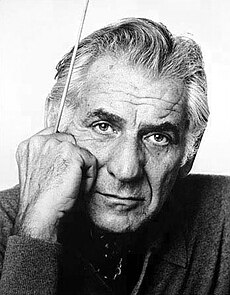
Leonard Bernstein

(1918 – 1990)

An American composer, conductor, author, music lecturer, and pianist. 

His fame derived from 

- his long tenure as music director of the New York Philharmonic
- his conducting most of the world's leading orchestras
- his music for 
          Candide
          Wonderful Town
          On the Town (including New York, New York)
          his own Mass
          West Side Story  


Many of his works are regularly performed around the world, although none has matched the tremendous popular and commercial success of West Side Story   
Enacting 'Romeo & Juliet' in NYC settings.
* Tonight - the backstair was the balcony


= = = = =
Bernstein was a skilled pianist, often conducting piano concertos from the keyboard.
Mozart's Piano Concerto No.17   Mvt.3 Allegretto - Presto

He was also the first conductor to give numerous television lectures on classical music; e.g. 
Source: Wikipedia