Tuesday, October 21, 2014

Ballet Appreciation Series (2014#3) - Onegin

Onegin (1965) ballet 
- choreographed by maestro John Cranko (1927-73)
- based on Pushkin's Russian poem story of the same name
- adopting Tchaikovsky's various music pieces (other than his Onegin opera) 

Audience needs not do homework before watching it, because the story is clearly told by means of dancing, body languages, and music -- just like a mime. Audience easily feels the poetic vision of love, depression and sadness, insanity and struggles of love.

As we watch only segments, here's an outline:

1. Tatiana's sister and the latter's fiance dance
2. Tatiana meets and falls for sophisticated Onegin [0:17]
3. Onegin rejects plain-looking Tatiana and tears up her love letter [0:36]
4. Onegin flirts with her sister [0:57] and then kills the fiance in a duel [1:08]; Onegin has to disappear for years
clip #1

Missing from the above video is: 
2A. In her sweet dream, Onegin loves her.

5. Tatiana got married to a prince who loves her [2:18]
6. Onegin returns and falls for Titiana, now a noble beauty [7:50]
7. Titiana rekindles her old flame and enjoys being courted by Onegin [10:50]
8. ... for a while 
clip #2

Highly recommend that you watch a full version, any version. 譚元元or曹舒慈of China also excel. Alert: you may need some tissues for your eyes.

Cranko founded the Stuttgart Ballet company in the German city, famous for making Mercedes and BMW. In 1973, on a flight across the Atlantic to Germany, he died young from over-sensitivity to a sleeping pill. Pity.


Comments by dancers


……
譚元元:


Ballet Appreciation Series (2014#2) - Jewels

Jewels (1967) is a three act ballet, created for the New York City Ballet by co-founder and founding choreographer George Balanchine (1904-1983). 


It 
- is abstract ballet, or non-narrative (just dancing - with no stories to tell)
- has 3 movements: Emeralds, Rubies, and Diamonds.
Balanchine skilfully mixed old components to produce something new.


Movement 1 - "Emeralds
Dressed in GREEN, the dancers demonstrated 19th Century Romanticism and elegant French school, to Fauré's music from his "Pelléas et Mélisande" (1898) suite, and "Shylock" (1889) (Fr version of Shakespeare's The Merchant of Venice.)


Movement 2 - "Rubies" 
Dressed in RED, the dancers exhibited lively and witty modern ballet, to Stravinsky's Capriccio for Piano and Orchestra (1929). 


Movement 3 - "Diamonds" 
Dressed in WHITE, the dancers exhibited glamour and dignitary grace of the Russian palace, to Tchaikovsky's Symphony No. 3 (1875). 


Sunday, October 19, 2014

Ballet Appreciation Series (2014#1) - Cinderella

Ballet Appreciation Series (2014)
... every Thursday evening, in the past 3 months, by Margaret Lau

The first evening class was on "Cinderella"
- music by Prokofiev (1891-1953)
- different choreographies by 3 British masters, each with innovative ideas...


The first master choreographer is Federick Aston (1904-1988).
Here, Cinderella in the kitchen,
where the huge portrait of her deceased mother is allowed.

Cinderella dancing with the prince at the ball. Cindy's "ugly step-sisters" were enacted by two cross-dressed men, including Ashton himself. 


The second master choreographer introduced is David Bintley (1957-), who took a more realistic approach.
Poor Cinderella is bare-footed, or wearing her mother's shoes. 
Her mother's portrait is small.

Her step-sisters are only underweight or overweight, but both clumsy at dancing. 
The clock (metronome) clicks
count-downs towards mid-night.


The third master choreographer introduced is Christopher Wheeldon (1973-). The prince and his commoner friend exchanged clothes before delivering party invitations to households with eligible girls. 
Cinderella's step-sisters are not ugly at all, but snobbishly escort away the faked prince without leaving an invitation to Cindy. Cindy says good-bye to the prince, in plain clothe, who tries to cheer her up.


... then the clock clicks towards mid-night ....

Saturday, September 20, 2014

Painting - Xu Beihong / 徐悲鸿

Xu Beihong / 徐悲鸿  

... born 119 years ago.


(L)  Xu Beihong Museum at Beijing
 
(R)  立马图


= = = = =
EXTRA

中國十大名畫


Thursday, September 11, 2014

Painting #100 - Summary


An engraving of a painting by Heinrich Merté (1838-1917)
“The Capitol is Rescued by the Holy Geese of Juno”
390 B.C.E. July
- woodcut (31 x 42 cm) 1882
- Sammlung Archiv für Kunst und Geschichte (Berlin)
Gauls from northern Italy attempted to attack the Capitol of Rome by night and by surprise. But the flock of sacred geese made such a noise with their wings and had warned the defending soldiers.


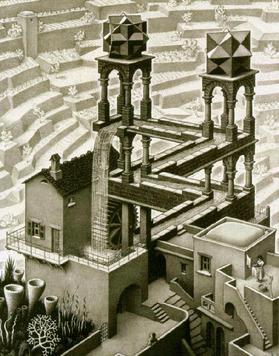
Painting #099 - M.C. Escher

M.C. Escher  
(1898–1972, Dutch)


- Escher in 1948
- lithograph (28 × 33 cm)


- Escher in 1935
- lithograph (32 × 21 cm)


- Escher in 1961
- lithograph (38 × 30 cm)


- Escher in 1944
- lithograph (34 x 47 cm)


- Escher in 1938
- woodcut (44 x 44 cm)


Source: Wikipedia


Painting #098 - Pop Arts


Andy Warhol 

(1928–1987, American pop artist)
- Andy Warhol
- Acrylic on canvas (silkscreen painting) (205 × 290 cm) 1962
- Tate (London) 
  
(L) Marilyn Diptych        (R) Andy Warhol


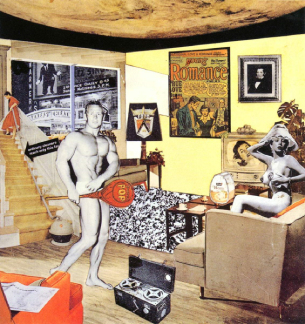
Richard Hamilton 

(1922–2011, English pop artist)
- Richard Hamilton
- Collage (26 × 25 cm) 1956
- Kunsthalle Tübingen (Germany)


Source: Wikipedia