Hildegard of Bingen
(1098 – 1179, German)- aka Sibyl of the Rhine (many sought her prophecy)
- aka Saint Hildegard von Bingen (although she was never formally canonized)
 |
| She experienced intense visions (probably due to migraine), which she recorded in her books; she came to be known for her prophecies and miracles. |
She founded a nunnery near Bingen. She was a German writer, composer, philosopher, polymath, Benedictine abbess, Christian mystic, and visionary. Her achievements were remarkable - and unique for a woman of her time.
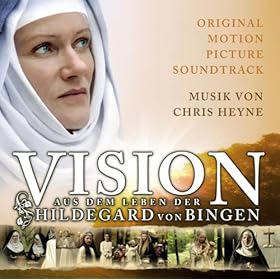
In music, her specialist genre was plainsong-equivalent writing of her own poetry.
Her Ordo Virtutum (Order of the Virtues), a morality play, which describes the sixteen Virtues battling with the Devil, is an early example of liturgical drama and arguably the oldest surviving morality play.
Symphonia armonie celestium revelationum (Music harmony of celestial revelations) is a collection of lyric and dramatic poetry:
Note the nice antiphons (call and response)?
Symphonia armonie celestium revelationum (Music harmony of celestial revelations) is a collection of lyric and dramatic poetry:
Part 1
Caritas Abundat
Gregorian chants
Some hundred years ago, the Catholic friars (brothers) sang 'plainsongs' in the monastery, without the accompaniment of musical instruments.
Pope Gregory I (c.540-590-604) used his authority to collect and compile them, leaving behind a collection of songs or a singing style called the 'Gregorian chants'.
Pope Gregory I (c.540-590-604) used his authority to collect and compile them, leaving behind a collection of songs or a singing style called the 'Gregorian chants'.
One could sing along, as the notes simply run up and down the 4-line staff invented by Guido de Arezzo, and with rather straightforward Latin lyrics.

No comments:
Post a Comment