Sunday, June 9, 2013

Music #396 - Verdi - La Traviata

Giuseppe Verdi

[dʒuˈzɛppe ˈverdi]  (1813 – 1901)

La Traviata 

Based on Alexandre Dumas's play La dame aux camélias, the opera is about courtesan Violetta and her love for Alfredo, which is thwarted by Alfredo's father. Dying of consumption, Violetta does what he asks, only to be reconciled with Alfredo and die in his arms.

A1  Brindisi - "Libiamo ne' lieti calici"  (The Drinking Song)

(L) Angela Gheorghiu & Roberto Alagna in duet
 
(R) Anna Netrebko & Rolando Villazón in duet

(L) except from the La Traviata (1982) movie
 
(R) excerpt from The Three Tenors 
- at The 1994 World Cup (L.A.), with a lyrics video


A1Finale  "È strano! ... Ah, fors' è lui"  (Ah, perhaps he is the one)


A1 Finale  "Sempre libera [degg'io]" (Always free)
- soprano-tenor duet


A2S1  "Di Provenza il mar, il suol chi dal cor ti cancellò?"
(Who erased the sea, the land of Provence from your heart?)


A2S2  Party at Flora's house
Flora calls for the entertainers to perform for the guests:
     (1)  "We are gypsy girls who have come from afar"
     (2) "We are matadors from Madrid" 
- excerpt from the La Traviata (1982) movie:
     

A3  "Parigi, o cara, noi lasceremo" 
(We will leave Paris, O beloved)


(L) A full opera (2h)


(R) An excerpt (11m)


= = = = =

* flashmob


(L) "We are gypsy girls who have come from afar"      
 
   (R) a puppy joins in the Drinking Song


Music #395 - Verdi - Il Trovatore

Giuseppe Verdi

[dʒuˈzɛppe ˈverdi]  (1813 – 1901)

Il Trovatore / The Troubadour / 游唱诗人

It is a four-act opera based on the play El trovador (1836).  Today, in its Italian version, it is given very frequently and is a staple of the standard operatic repertoire.

A2S1:  Anvil Chorus / Chorus of Gypsies
The gypsies sing the Anvil Chorus: Vedi le fosche notturne 
/ See! The endless sky casts off her sombre nightly garb...


A2S1:  Canzone: Stride la vampa / "The flames are roaring!"
 
A3S2:  Cabaletta: Di quella pira l'orrendo foco 
/ The horrid flames of that pyre


(L) A full opera, with English subtitles 
 
(R) Explained


= = = = =
Bonus:


Music #394 - Verdi - Rigoletto

Giuseppe Verdi

[dʒuˈzɛppe ˈverdi]  (1813 – 1901)

Rigoletto 

Rigoletto is an opera in three acts. The Italian libretto was written by Francesco Maria Piave based on the play "Le roi s'amuse" by Victor Hugo. 
        Its tragic story revolves around the licentious Duke of Mantua, his hunch-backed court jester Rigoletto, and Rigoletto's beautiful daughter Gilda.
        The Duke's men kidnap Gilda and take her to the palace. Rigoletto comes looking for Gilda, but when he finds her, she has already been disgraced.
        Rigoletto pays an assassin to murder the Duke. Gilda substitutes herself for the Duke, and is fatally wounded. Rigoletto takes a sack that he believes to contain the Duke's body and finds, instead, his dying daughter.

A full version (120 minutes)
- with English subtitles

Rigoletto was performed in Cairo to celebrate the opening of the Suez Canal.


Some selections:

Act 1 

(L) Scene 1 - A room in the palace
* Questa o quella / This woman or that
 
(R) Scene 2 - A street, with the courtyard of Rigoletto's house
* Pari siamo! / We are alike!

Act 2 

- The Duke's Palace

(L) * Caro nome / Dearest name
 
(R) * Cortigiani, vil razza dannata / Accursed race of courtiers


Act 3 

- A street outside Sparafucile's house

* La donna è mobile / Woman is fickle
 

* Quartet: Bella figlia dell'amore / Beautiful daughter of love


Music #393 - Verdi - Nabucco

Giuseppe Verdi 

[dʒuˈzɛppe ˈverdi]  (1813 – 1901)

An Italian Romantic composer, mainly of opera:
• Verdi is considered with Richard Wagner the most influential composer of operas of the 19th century, and dominated the Italian scene after Bellini, Donizetti and Rossini.
• Verdi developed his art from the influences of the three, through his use of French Grand Opéra forms in operas written for Paris, and, eventually, to the creation of his Shakespearian masterpieces, Otello and Falstaff. Throughout, his originality and fecundity remained unparalleled. 

Some of his themes have long since taken root in popular culture – such as 
- "La donna è mobile" from Rigoletto
- "The Drinking Song" from La traviata
- "Grand March" from Aida
- "The Chorus of the Hebrew Slaves" from Nabucco

= = = = = = = =

Nabucco  

Nabucco follows the plight of the Jews as they are assaulted, conquered, and subsequently exiled from their homeland by the Babylonian King Nabucco.
 
(2h 10m)


Act 1

“Gli arredi festivi” (festive decorations)
The Israelites pray as the Babylonian army advances on their city ("Gli arredi festivi giù cadano infranti" / "Throw down and destroy all festive decorations").


Act 3

The best-known number from the opera is 'Va, pensiero' (the 'Chorus of the Hebrew Slaves')
 
(L) Italian lyrics         (R) English translation

• Then, Italy was colonized by the Austria Empire. Verdi composed this opera to project freedom for Italy.
• During its premiere, the resonated audience encored this chorus three times.
• After the performance, Italians paraded on the streets, holding torches, singing this chorus, and shouting "VIVA VERDI!"
• This chorus became an anthem for the Italian Risorgimento movement for unification. 


In January 1901, at Verdi's funeral procession, 300,000 Italians gathered along the streets of Milan, singing and humming this chorus. 

= = = = =


Source: Wikipedia


Tuesday, June 4, 2013

Music #392 - Bruckner

Anton Bruckner 

[ˈantɔn ˈbʀʊknɐ]  (1824 – 1896)

An Austrian composer, Bruckner's compositions helped to define contemporary musical radicalism, owing to their dissonances, unprepared modulations, and roving harmonies.
        Unlike other musical radicals, such as Richard Wagner or Hugo Wolf who fit the enfant terrible mould, Bruckner showed extreme humility before other musicians, Wagner in particular. 
        Bruckner was greatly admired by subsequent composers, including his friend Gustav Mahler, who described him as "half simpleton, half God".


Symphony No. 4

- aka "Romantic"


Symphony No. 7 


Symphony No. 8  


Symphony No. 9

- lack of an affirmative ending  [the work is unfinished]


為什麼一定要聽Bruckner的交響曲

Te Deum

“Te Deum laudamus” [“We praise thee, O God”]
- a four-part choir and orchestra


Monday, June 3, 2013

Music #391 - Brahms

Johannes Brahms  

[joːˈhanəs ˈbʁaːms]  (1833 – 1897, German) 

A composer and pianist, he is sometimes grouped with Bach and Beethoven as one of the "Three Bs". 
    Though his music was rooted in Classicism, its expressive and gigantic nature was Romantic at its core. 
     His music was extremely innovative. The key to his innovation is the "developing variation," the constant reworking of small fragments of musical material as a composition progresses, e.g. the Clarinet Quintet.
     His music is frequently described as autumnal - passionate and romantic. 

List of compositions by genre

He composed masterpieces in all genres except opera.


Sixteen Waltzes for Piano

* all 16 waltzes (four hands) 
* No.15 - Evgeny Kissin (two hands)
 
Four hands: 兩人四手聯彈一架鋼琴,不論是音域的廣度,還是音樂表現力的豐富程度,都遠遠優于一人演奏。在當時非常流行,非常適合家庭小型聚會和音樂會舞台演奏。

21 Hungarian Dances

- as compiled by him
- originally he wrote them for piano four-hands and later arranged the first 10 dances for solo piano (the remaining 11 dances were less amazing)
- he rearranged №1, 3 and 10 for strings concerts

 No.5, Allegro-Vivace, is better known
and has been rearranged for various instruments:


Variations on a Theme by Handel, Op.24


Piano Quartet No.1, Op.25

- “a stormy, passionate, and youthful work”


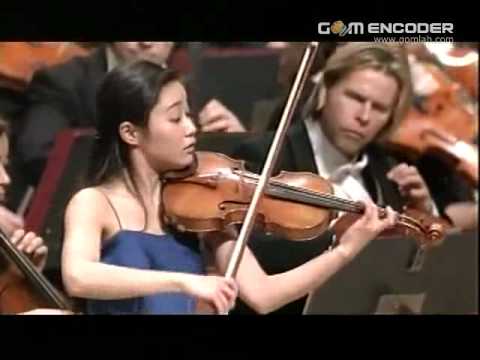
Violin Concerto 

- one of the three greatest concertos on earth
- a large-scale work, ferociously difficult for the violin soloist
- 3 movements
Sayaka Shoji 庄司紗矢香 - III.

- his very finest chamber work

 L


Symphony No. 1

- immediately dubbed “Beethoven's Tenth”
 
(L) 3.5 minutes            (R) 56 minutes


Symphony No. 3 

Mvt.1 Allegro con brio
Mvt.2 Andante 
Mvt.3 Poco allegretto
Mvt.4 Allegro — Un poco sostenuto 
- “unfortunately over-famous”


/ Tragische Ouvertüre, Op. 81
- a concert overture for orchestra 


The Schicksalslied 

/ Song of Destiny, Op. 54
- an orchestrally accompanied choral setting of a poem


Lullaby 

Cradle Song / Wiegenlied: Guten Abend, Gute Nacht
* mother singing  (by Celine Dion)


(L) Vier Ernste Gesänge, Op.121
- Four Serious Songs
- composed as a response to the death of Clara Schumann
 
(R) How Lovely are Thy Dwellings Fair


Source: Wikipedia


Music #390 - THE LATER ROMANTICS

A great book on ...
THE GREAT COMPOSERS
written by Wendy Thompson
published by Hermes House

The Later Romantics

Music Sets #391 - 409


Music on the Grand Scale:-

* Two musical giants 

dominated the second half of the 19th century
     Johannes Brahms - belonging to mainstream German symphonic tradition
     Richard Wagner - mainly operatic works; forceful and influential. (Richard Strauss, Bruckner and Mahler owe an enormous debt to Wagner.)

* Italian opera

     Giuseppe Verdi - took on the mantle of Rossini
     Giacomo Puccini - successor of Verdi

* Nationalism  - in full swing

     Mahler in Austria
     Sibelius in Finland
     Faure & Saint-Saens in France
     Elgar in England
     Rachmaninov in Russia

Source: The Great Composers